



About Brandon Patton
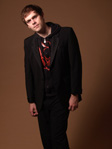
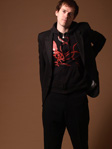
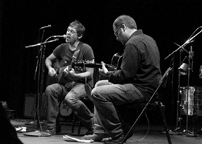
Brandon Patton is a game designer and musician based in New Haven, CT.
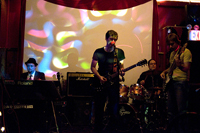
Patton plays bass under the pseudonym BL4k Lotus for MC Frontalot, progenitor of "nerdcore hiphop." MC Frontalot's band and its first national tour was the subject of the documentary Nerdcore Rising.
Patton has also performed with playwright Prince Gomolvilas in the underground theater duo Jukebox Stories, called "one of the 10 best plays of 2008" by the East Bay Express.
Game Design
* Super PACS: The Game of Politics About the Game of Politics
(2016, TableTip Games)
* Healing Blade: Defenders of Soma (2016, Nerdcore Medical)
Finalist in Fast Company's 2018 World-Changing Ideas Awards.
* Occam's Razor: The Diagnostician's Dilemma
(2013, Nerdcore Medical)
* The Tomes, an educational tablet game for 6th grade reading.
(Role: Assistant producer.)
* Healing Blade: Infectious Disease Battle. Rulebook V2.0
Music Awards
* Winner of the Vox Populi for Best Story Song of 2009 for Mixed-Up Modern Family by the 9th Annual Independent Music Awards.
* 2009 Finalist in the USA Songwriting Competition in the Rock/Alternative category.
* Featured on NPR's song of the day Oct. 8, 2009.
* Top Music Artist at the 2005 Temecula Film and Music Festival.
* The album Should Confusion was a finalist for Album of the Year in the 2004 Independent Music Awards.
* Finalist in the 2004 Newport Folk Festival New Talent Showcase.
Solo Albums
* How I Allegedly Bit a Man in Gloucestershire (2011)
* Underhill Downs (2009)
* Should Confusion (2004)
* Nocturnal (1997)
Other Albums
* Jukebox Stories, The Official Bootleg (2008)
* three against four, Hey Sparkle Eyes (2002)
* three against four, Some of Us Are Here (1998)
Compilations featuring Brandon Patton
* Nerdcore Rising: Music From the Motion Picture (2008)
* Indie Pop Cares A lot (2005)
* Temecula Valley International Film & Music Festival 2005 Compilation (2005)
* The WSVNRadio Hall of Fame, Vol. 14 (2004)
* Oasis Acoustic Vol. 47 (2004) note: due to a printing error, he is listed only as Brandon
Music Festival Appearances
* SXSW Music Festival (2012)
* Truck America (2010)
* Heart of Texas Quadruple Bypass Music Festival (2008)
* Newport Folk Festival New Talent Showcase (2005)
* Temecula Film and Music Festival (2005)
* NXNE Toronto (2005)
Associated Musical Groups
* MC Frontalot (2006 - present)
* Futureboy
* Jonathan Coulton
* The Famous
* MC Lars
* Steve Songs
* Solea
* three against four (1997-2000)
Theater
* Jukebox Stories 3: The Secrets of Forking (2013, performer)
* Jukebox Stories 2: The Case of the Creamy Foam (2008, performer)
* Love Sucks! A Punk Rock Musical (2007, composer) - Honoroable Mention, 2007 NY Musical Theatre Festival
* Jukebox Stories (2006,2007, performer)
* The AtrainPlays (2005–2007, composer)
* Young Zombies in Love (2004, bassist)
Film
* Remedy (2013) background music
* The Muslims Are Coming (2012) background music
* Nerdcore Rising (film) (2008) as himself
About his past
Patton has been writing music since he was pre-pubescent. When he was 11 years old, the composer/ethnomusicologist Miriam Gerberg rented a spare room in his house and Patton enlisted her help to write his first song, entitled "I'm Not Your Slave," a protest about household chores. In junior high, when he started listening to punk rock, he and his friends set out to be offensive and brash. Patton later found inspiration in a vibrant Twin Cities DIY counter-culture of zine writers and indie bands who would brandish the word “sellout” and discuss politics in independent coffeehouses and alternative art galleries.
He attended Wesleyan University in Connecticut, where the music department was ruled by experimental composers and ethnomusicologists. "It was incredible what I was exposed to there," says Patton, "but there was also this Midwestern voice in my head whispering 'College is not the real world.' I didn't want to become a disciple. And I couldn't play any of this amazing world music I loved and still have any authenticity." So in his own writing, he ended up turning toward the rock and pop of his youth. “I got obsessed with trying to figure out who I was in the midst of all of these new influences,” says Patton. “I was searching for an authentic expression of myself.”
After college, his first experience playing music professionally rammed this point home. He spent a summer playing Caribbean music (which he loves) for drunken tourists (not so much) next to a beach volleyball court inside a giant country western bar on Cape Cod (hated it).
His first solo album, "Nocturnal," was recorded after hours in the basement of an office building in Easthampton, MA. Patton frequently let a homeless friend sleep in the studio, and one night said friend locked himself out of the room wearing nothing but underwear and had to hide under the staircase for an entire work day until Patton happened by.
Patton used to play in the band three against four with Jay Skowronek (Maxeen) and fellow schoolmate Anand Nayak (Rani Arbo and Daisy Mayhem). Nayak and Patton were wandering down a dirt road one day and stumbled upon a decrepit slaughterhouse that turned out to be a recording studio. Inside was audio engineer Mark Alan Miller, who had worked with nearly every rock group in Western Massachusetts, including area royalty J.Mascis. Miller would later mix many of the tracks for their albums, as well as many of the tracks on Patton's later solo work.
Patton signed a deal with music publisher ACMRecords which lead to music getting placed onto the soundtracks of several TV shows, including Monster Garage, That 70s Show, and The Real World.
Since moving to Connecticut and starting a family, he has been channeling his creative energy into designing card games. In 2012 he learned about an infectious disease card game called Healing Blade which was gaining attention for its theme and artwork but poor marks for gameplay execution. He began a correspondence with the doctor who created it about how the game could be improved, which resulted in Dr. Mathews hiring Patton to rewrite the rules and build a better sequel. Their collaboration led to Healing Blade: Defenders of Soma and the webstore Nerdcore Medical.
In 2014 Patton met André Pereira, a robotocist who also designed games. Pereira had designed a political satire game with his Portuguese friends back home, and Patton and Pereira set out to create an American version. Their collaboration led to Super PACS: The Game of Politics About the Game of Politics, which debuted in 2016 shortly before the election. The political events that followed also inspired an expansion to satirize the Trump years.
Patton continues to work on educational games for medical students, and also has several other game projects in the works. For the time being, music has taken a back seat.